

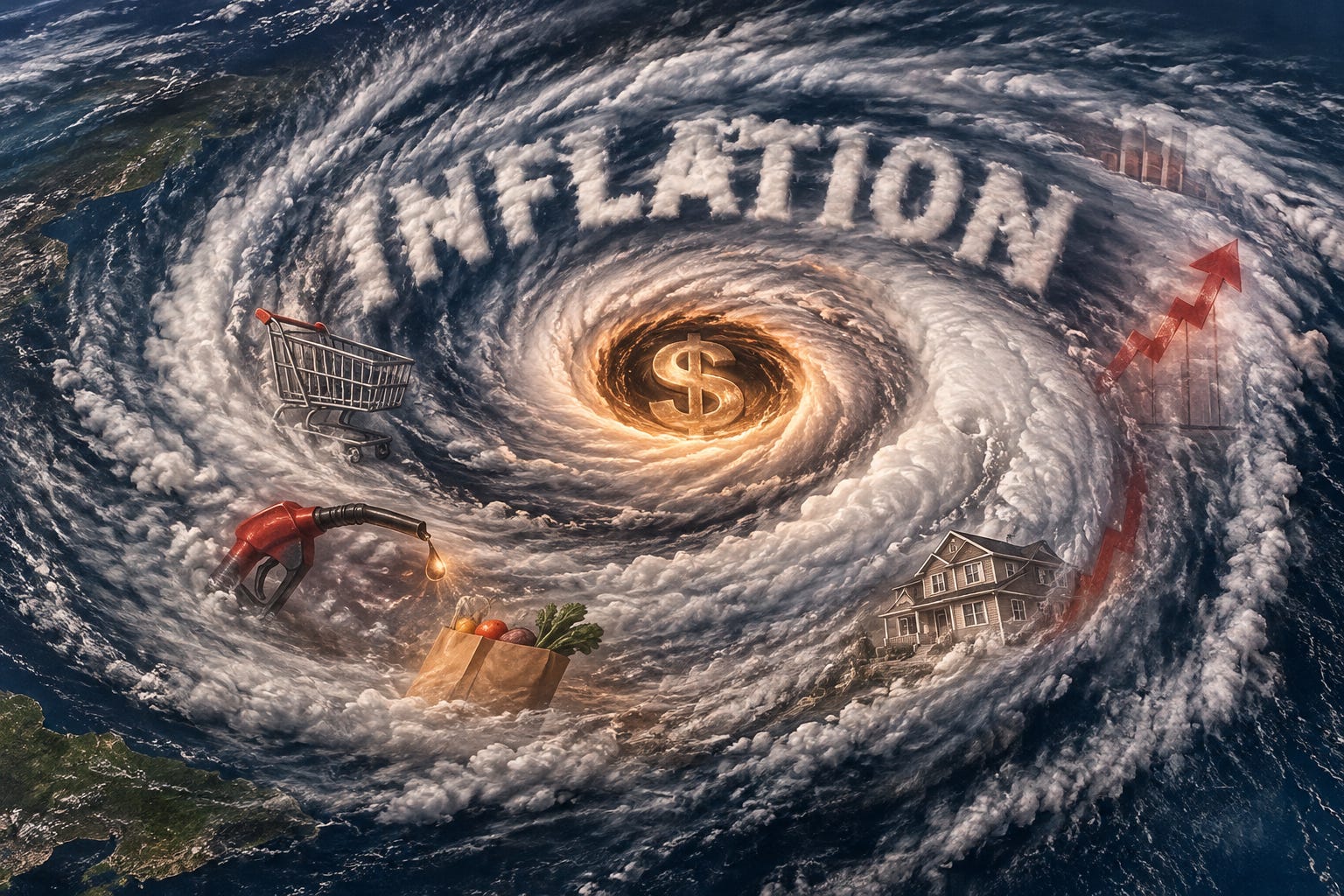
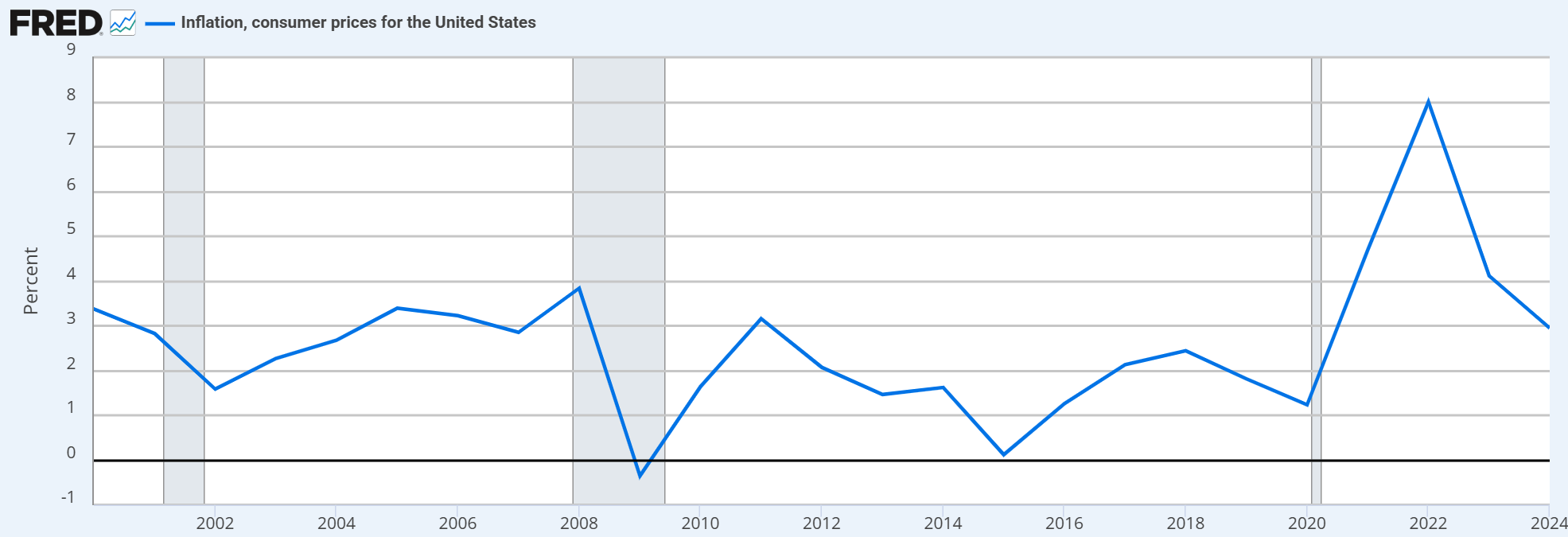
The results of the US midterms served as a seething indictment of Trump policies regarding trade, war, peace and affordability. 89% voters viewed affordability as the primary driver of their vote and 74% viewed the War in Iran as “crucial or a major factor” in their vote, in part due to rising fuel prices and the broader knock-on effects that follow. Trump’s tariff policies proved unpopular despite being much boasted during the 2024 campaign and, though wages, jobs and growth are all up while inflation has moderated relative to the Biden administration, the 21 months since Trump took power - with all that Trump has attempted to do in that time - simply proved too much for the electorate to bear in that timeframe.
Interestingly enough, Trump’s capture of Maduro and subordination of Venezuela, the “Donroe Doctrine” or the “Greater North America” plan were not polled by any major news outlet. In the context of grand strategy, these are critical pieces of realigning and reorganizing the American economy in order to securely continue to climb the “high-value-added” ladder of production, along with continued tacit defense of Taiwan until TSMC production is fully built out in Arizona (at added cost, mind you).
Some on the right (like Victor Davis Hanson) have argued that voters are unable to make the distinction between inflation and prices: that base effects mean that prices remain persistently high while consumers expected prices to go down in absolute terms according to Trump’s promises in 2024.
While Trump has historically always made outlandish promises and failed to meet exact expectations, or simply grown tired and lost interest as a goal approaches, the main problem still remains apt to JD Vance’s post-hoc analysis that it was simply misguided to launch an unpopular war in an election year - should’ve been obvious enough at the time, perhaps. Indeed, the turnout only shifted by 2.2% between 2024 and 2026, despite total vote share shifting a presumed 7.9% on a generic ballot basis towards Democrats. This implies that the Tucker-Carlson-and-Groyper right did in fact impose a meaningful cost on Trump electorally as a result of feeling betrayed by the conflict in Iran.
Far more interesting is what is actually known about the state of populism on the right according to the NBC news exit poll. While a majority of republicans still support “capitalism”, a meaningful cohort oppose it, and an increasingly large percentage are beginning to admit they “don’t know enough to say”.

Because of the current relationship between wages, prices and America’s global imperial system, which is at the core of its ability to provide a high standard of living to the upper cohorts of its populace, many are reconsidering the relationship to capitalism within the country. “Socialism” is already on the rise and has been within the Democratic party for many years, but is perceived inherently unpopular among the broad base of voters, either due to historical Cold War propaganda, the Reagan-pro-market revolution, or some mix of cultural factors related towards propensity for entrepreneurship, voluntarism and preference for smaller government overall.
The interesting consequence here is that the last time America faced similarly persistent inflation in its economy - the “Wage Price Spiral” and the “Oil Shock” of the 1970s - it was arguably 1) too much socialism at home and 2) too much empire abroad that got them there. Unions had such leverage that they were able to negotiate guaranteed inflation-adjusted wages for most industrial workers, while it was in fact the Yom Kippur War which precipitated the first oil shock (at least in official discourse). The resolution of this was fivefold: 1) repression of unions, 2) outsourcing of industrial labor, 3) dismantling of many “New Deal” and “War on Poverty”-Era programs and regulations, 4) the balancing of America’s energy position by reconciliation with OPEC and 5) Volcker-era high interest rates bent on crushing inflation (and some homeowners, farmers and credit unions along with it).
These are in fact the Wages of Empire, as Putin once reminded us, and in both phases the United States had reached a state of “Imperial Overreach” as defined by the historian Paul Kennedy - the 1970s era in no small part due to near constant 10% of GDP (!) being expended due to the Vietnam War. Hence, the solution to the “Affordability Crisis” of the 1970s was to put the costs on the already-much-indulged US consumer, and they saw a decline in relative wages, substitution of domestic goods with cheaper foreign goods, reduced social spending and benefits ($22b in annual cuts to health, education and poverty relief in the 1980s), rising crime in the 1990s, people having fewer kids, social alienation, polarization and atomization, increased dependency on foreign labor, and the socio-economic malaise which persists today with respite only in the strong 90s economy and many of the more “liberal” values which people seem to reconcile themselves with in place of the strong community and family-oriented ethics of Post-WWII America.
We are well aware to the contemporary causes of debt and deficit in American policy over the last two decades: Wars in Iraq and Afghanistan, Bush-Era tax cuts, Bush-Era Stimulus, the 2008 Financial Crisis and its consequences, Obama-era largesse up to the fiscal cliff in 2013, TCJA in 2017, $5.2 trillion (!) in additionally unfunded COVID spending with absurd programs like PPP, the CARES Act and the “American Rescue Plan”, a meagre $200 billion for Ukraine and $40 billion on the Iran War, the gradual coming-due of $88 Trillion (!?!?!?!) in unfunded entitlement obligations, and now exploding debt-servicing costs (nearly $800b per annum increase since 2019), and of course Trump’s OBBB in 2025.

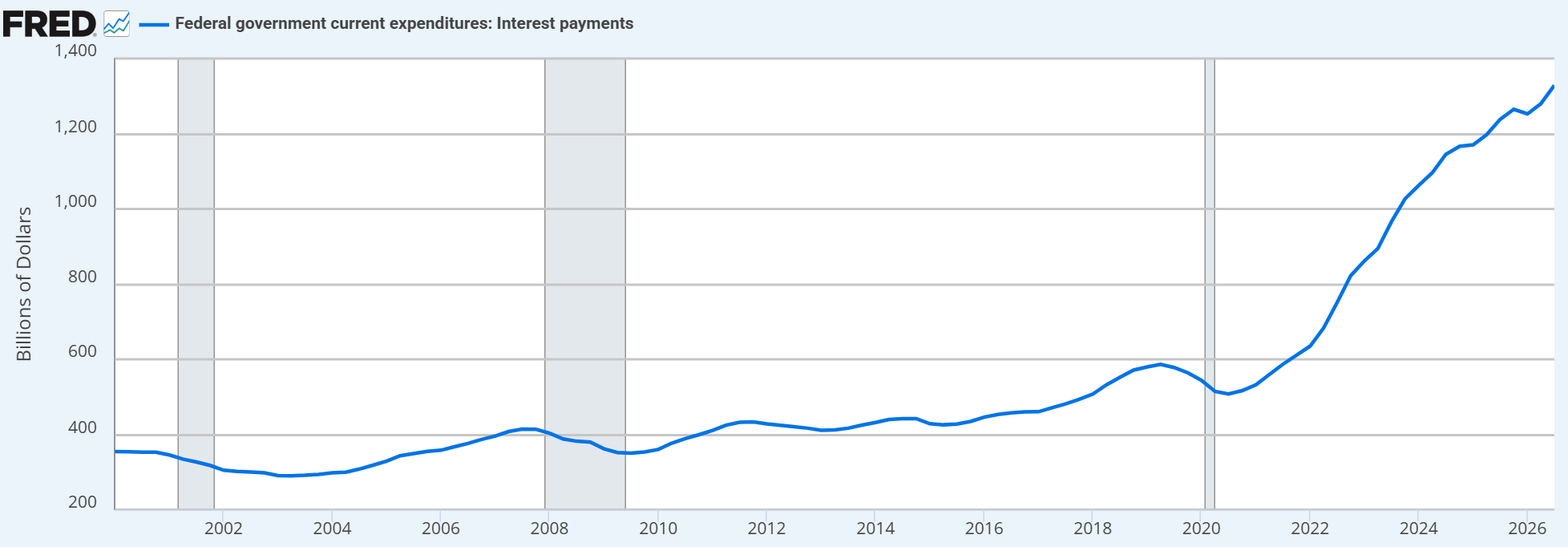
In these and broader contexts, the American government has served as nothing more than a Ponzi scheme for its voters since the first Bush Administration, and voter perceptions are only going to make the crisis worse before it gets better. 59% of Americans think taxes are too high (after various tax cuts) while nearly 40% paid no federal income tax altogether in 2025. Americans find Trump’s policies are hurting the economy, and one would think he just gave them a tax cut which they so crave, but in reality so few Americans pay meaningful federal income tax that they cannot feel the marginal benefit of any additional tax cuts, because there are no tax cuts remaining to be had.
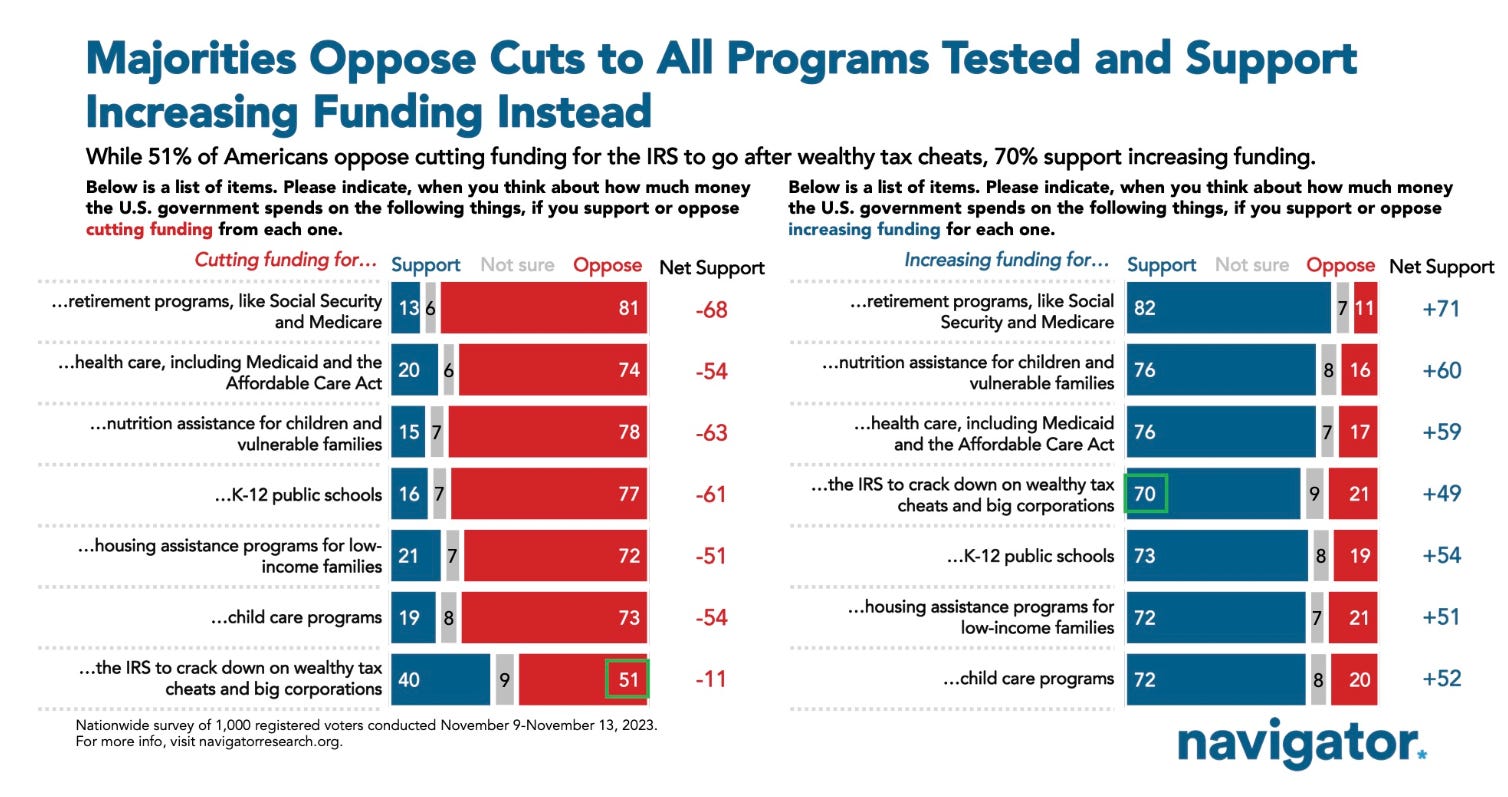
The other side of this equation is benefits, and on net, Americans want more benefits from their government as well. This is mostly from the Democratic side, but protection of entitlements (the largest source of deficit, spending and knock on inflation) are a bipartisan issue. More than 70% of Americans support increased funding on a range of social issues, even more than those who believe their taxes are too high. One wonders where they expect the money to come from.
The objective of the Trump trade and foreign policy regime was to in fact achieve a sort of strategic retrenchment that would enable the United States to sustain both the guns and butter it so desperately craves. In place of increasing direct taxes on workers and consumers, or taxes on capital which would increase incremental capital flight from US financial markets, increasing revenues through tariffs would alleviate debt with moderate effects on US asset prices, while encouraging some degree of domestic fixed capital formation and hence long-term wage appreciation, hopefully to such an extent that it would outpace inflation. This of course must be managed in the midst of higher input costs, consumer prices, retaliation from trade partners, decreased efficiency of capital allocation, and reduced productivity due to the diminished specialization of trade restrictions.
In this context, perhaps these costs alone were enough to bear towards the midterms, but adding on a War with Iran - not because of the direct costs or pre-existing inflation - accrued a second notch for the electorate against the Trump administration. Oil and gas infrastructure experienced chronic underinvestment between 2014 and 2021, making the global energy system increasingly vulnerable to both shocks and gluts, and thus making the secondary effects of the Iran War (like closing the Strait of Hormuz) impossible to sustain, and by all means, something that may not have been considered at all by the Trump Administration.
Taking a third factor of rising expectations from the American electorate (as unrealistic as they are in the current global trade regime), the outcome of the midterms becomes obvious. While it is easy to lay blame in one direction or the other, the easy explanation for most voters on these issues is simply to say “Trump puts himself before the country”. Of course, it doesn’t help that Trump campaigned on “No New Wars” either.
And so, Trump realized all of the short term costs of his policies when the benefits would be nowhere to be found by the time 2026 rolled around. The exceptions - or otherwise benefits - of the aftermath are an easing of the speed of a “US global strategic restructuring” and hence 1) reconciliation with Russia and China, 2) persistent regime-change pressure in Iran, which otherwise was perhaps politically unable to reconcile with US global order to begin with, 3) release of pent-up domestic investment in US as tariff-induced economic instability eases and 4) delegation of security responsibility in the various regions of the world and secession from control of most of the main global waterways.
The corollary to this is, of course, that while short term costs will decline, the US will become increasingly vulnerable to long term costs in the global trade system as - for instance - a right-wing, nationalist and perhaps neo-imperialist Europe collaborates with Russian energy as a supplier to exhibit more demand pressure on the global economy, or China consolidates power to create an internal trade system between itself, southeast Asia and the Middle East, gaining relative autarky in critical commodities while no longer needing a demand base in the United States. While withdrawal from these areas will lead to retrenchment in the Western Hemisphere in line with the “Donroe Doctrine”, enforcing new commodity, currency and economic integration regimes within that framework - and maintaining the potentially higher relative security costs of a new “multipolar” world come to fruition - means that again, only short-term costs will be realized, and the true benefits of restructuring will only come 20 or 30 years from now, if some Great Power Conflict doesn’t interrupt that as well.
In the meantime, the American electorate wants more, for less, and wants it all now. Years of moral, economic and spiritual decline since the post-war “Golden Age of Capitalism” mean that the American people - or what’s left of them - cannot wait any longer. In short term solutioneering, they may view “Socialism” as the answer, and will likely only realize increased economic costs concomitant with what has gotten them here in the first place. Much to consider, as it were.