

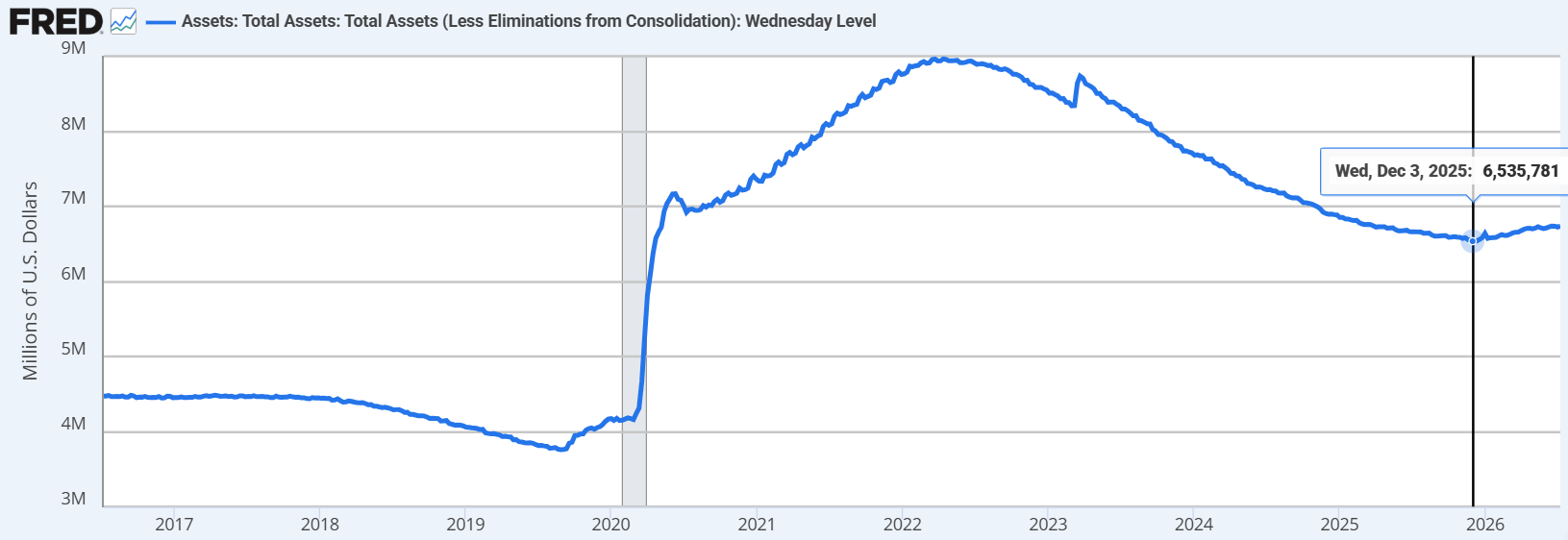
Debt is more often suitably addressed on a relative basis rather than absolutes. It should be no surprise that as the Fed balance sheet increased to match COVID restrictions - the the US Federal Government channeled that monetization with direct transfers to households - inflation ran roughshod, even after supply constraints diminished.
Now, the Fed is in a state where it is having to curtail its asset drawdown simply to match its outstanding liabilities. How could this be possible? Isn’t China supposed to be surpassing the US as global imperator? Hasn’t America “practitioned” decades of waste, fraud and abuse - almost as explicit policy - while it’s inner cities decay and its hinterlands burn?
The reality is that the United States is still the center of the global financial system, and as the world economy continues to grow, the CCP is unwilling to let go of its position in that country and - concomitantly - the capital controls which otherwise permit it to remain the biggest fish in that pond, by keeping foreign capital at bay. Being that investments are highly contingent on policy in China, and Europe persists in desiring no investment at all, the US is still the only place for international dollars to find a stable capital market with steady reserves and an abundance of companies to be deployed in. While bond rates straggle higher, the US debt to GDP has actually shown signs of stabilizing for the first time since the 1990s, on the back of nothing in particular except that - despite Trump’s animosity to foreign trade - there is simply nowhere else for dollars to go.
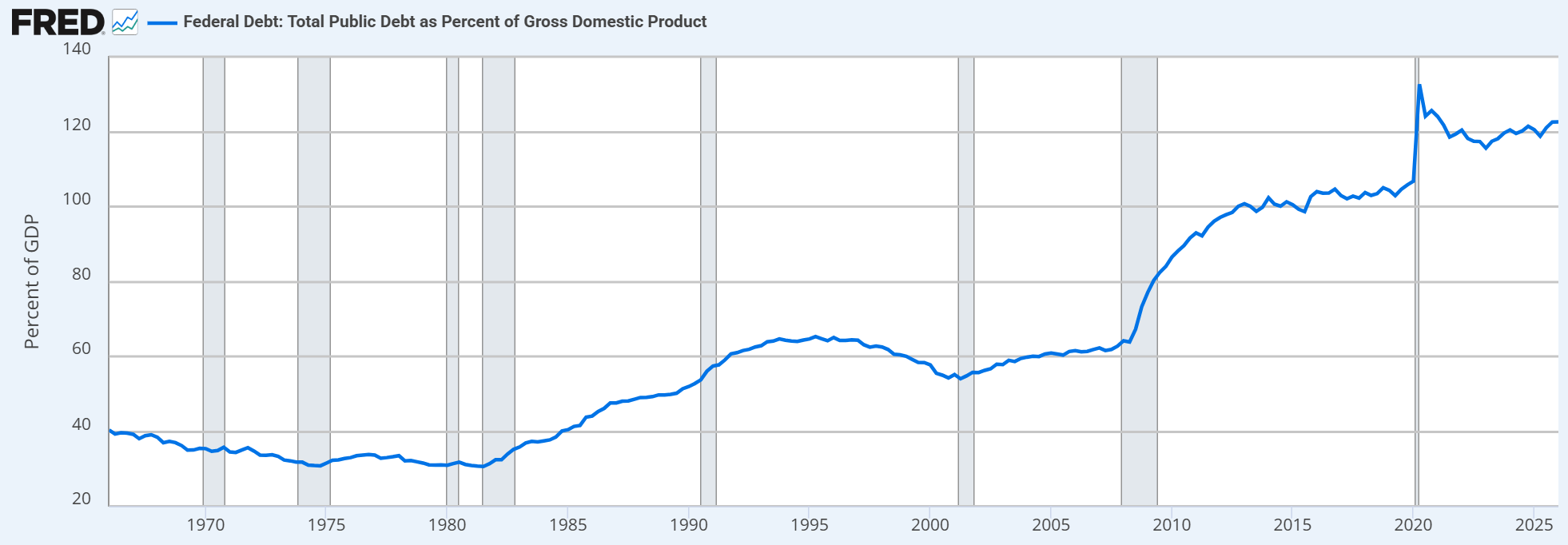
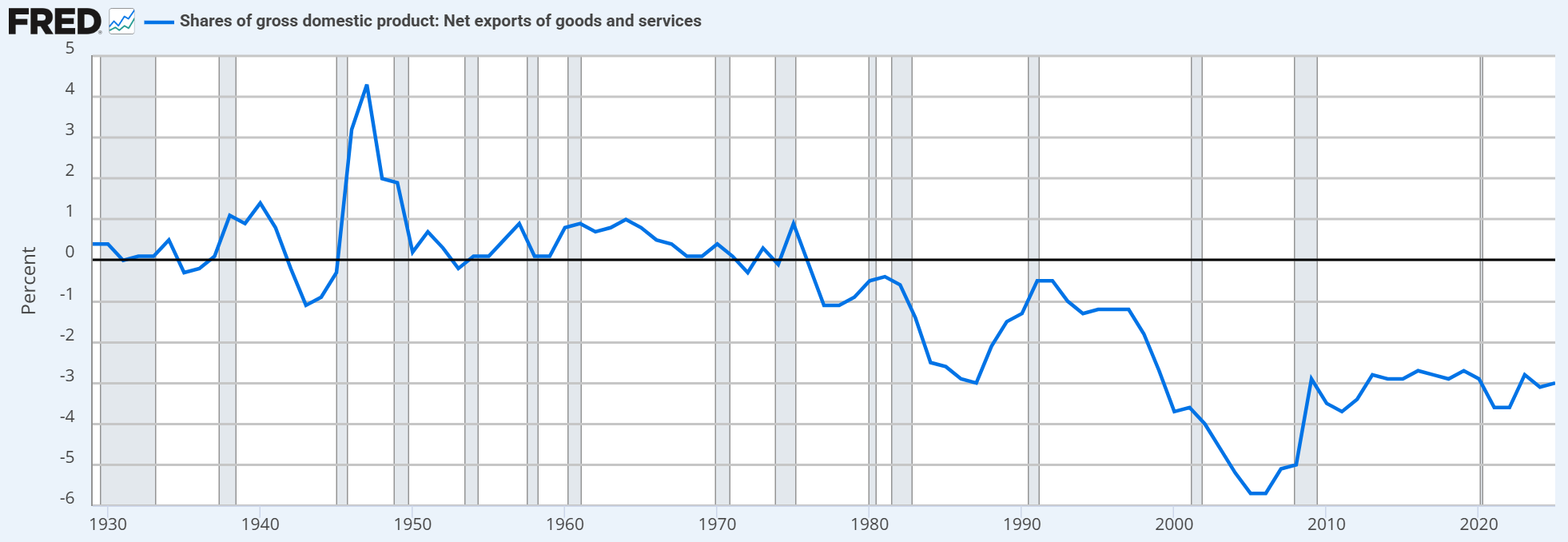
In fact, on the margins, it may be in fact the relative deficit in trade to GDP which is beginning to stabilize the American fiscal situation - and create an environment where economic stimulus will actually increase growth while also ensuring that that growth (and spending, and taxes) are captured domestically, allowing the government to maintain the benefits of loose monetary policy without facing the downside of globalization. You could say that while Reagan won the Cold War, American workers lost the peace that followed.
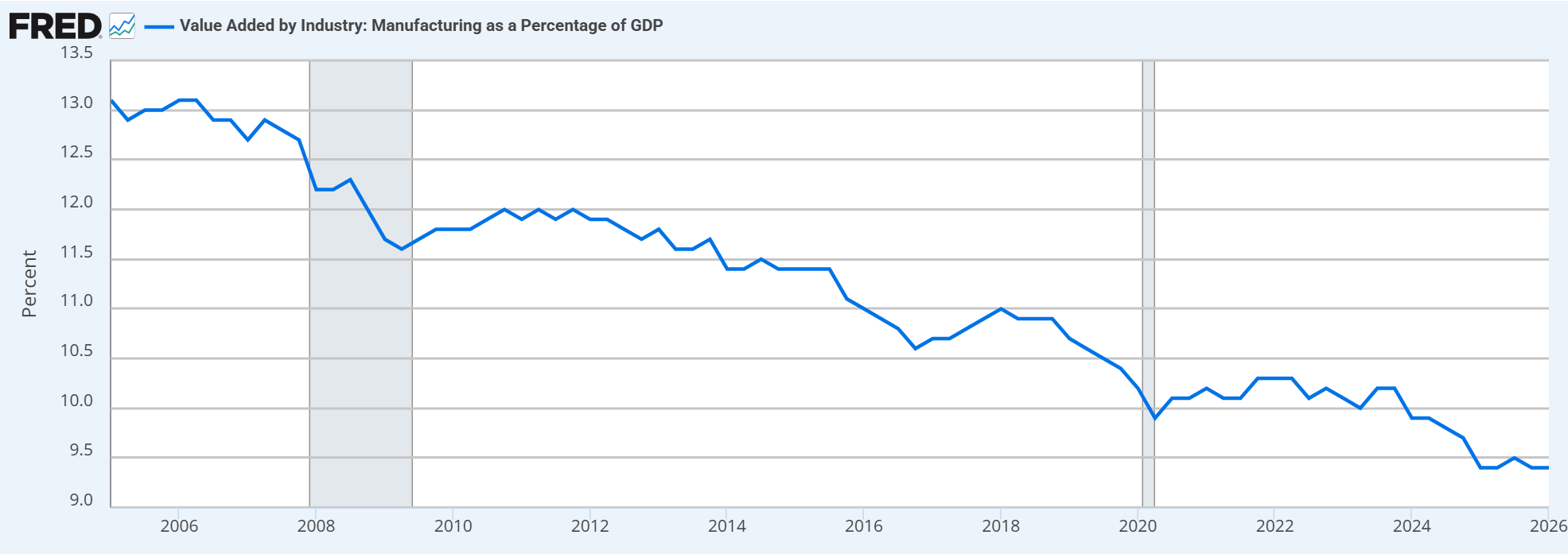
The long term risk here is that American dollars wash out less and less overseas and hence find themselves less consistently “free floating” and seeking American debt and equities. Much as that party may be over, more dollars being recycled internal to the United States, and there is clearly less perceptible growth in manufacturing as a share of the US economy to compensate for foreign imports. Even as a base case for domestic production, it’s likely that automation is the primary mode, and this is simply to substitute as certain amount of fixed consumption, nothing variable, that would be too risky to capitalize an automated production facility to fulfill.
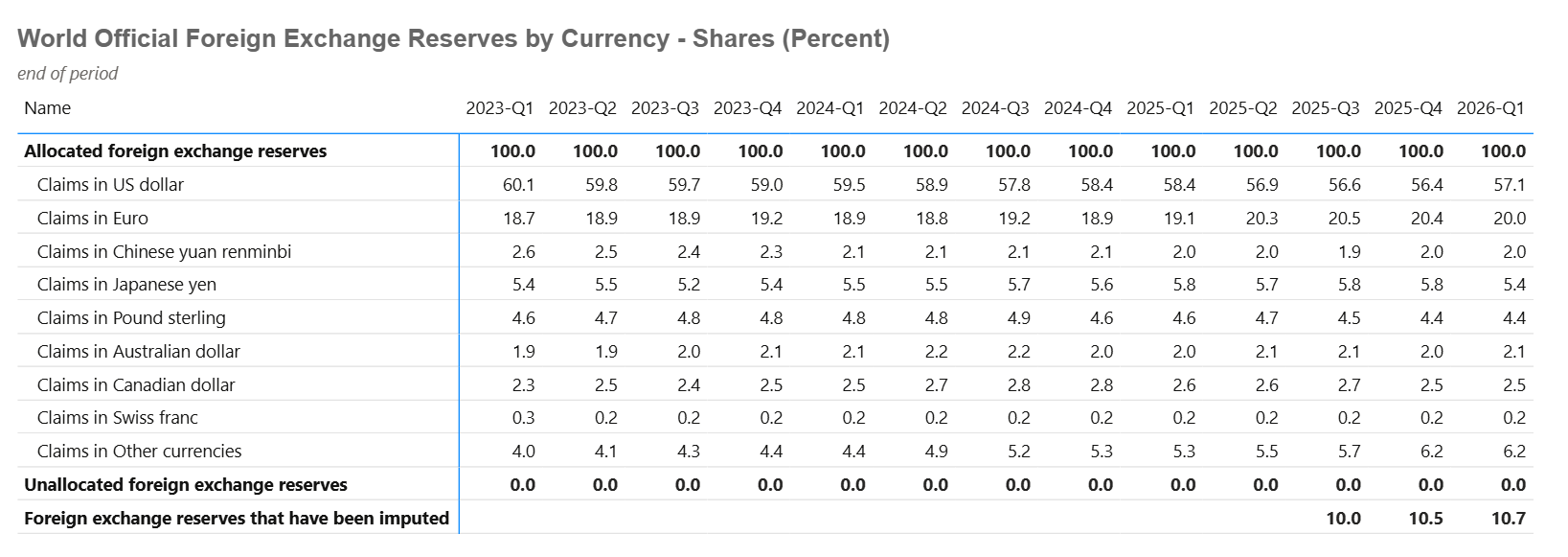
Global reserves of US currency are actually trending up slightly despite consistent year-over-year declines. In fact, Canada’s currency is as popular in reserve as China’s, despite China furnishing nearly 10 times the total exports of Canada globally.
source: https://data.imf.org/en/dashboards/cofer%20dashboard
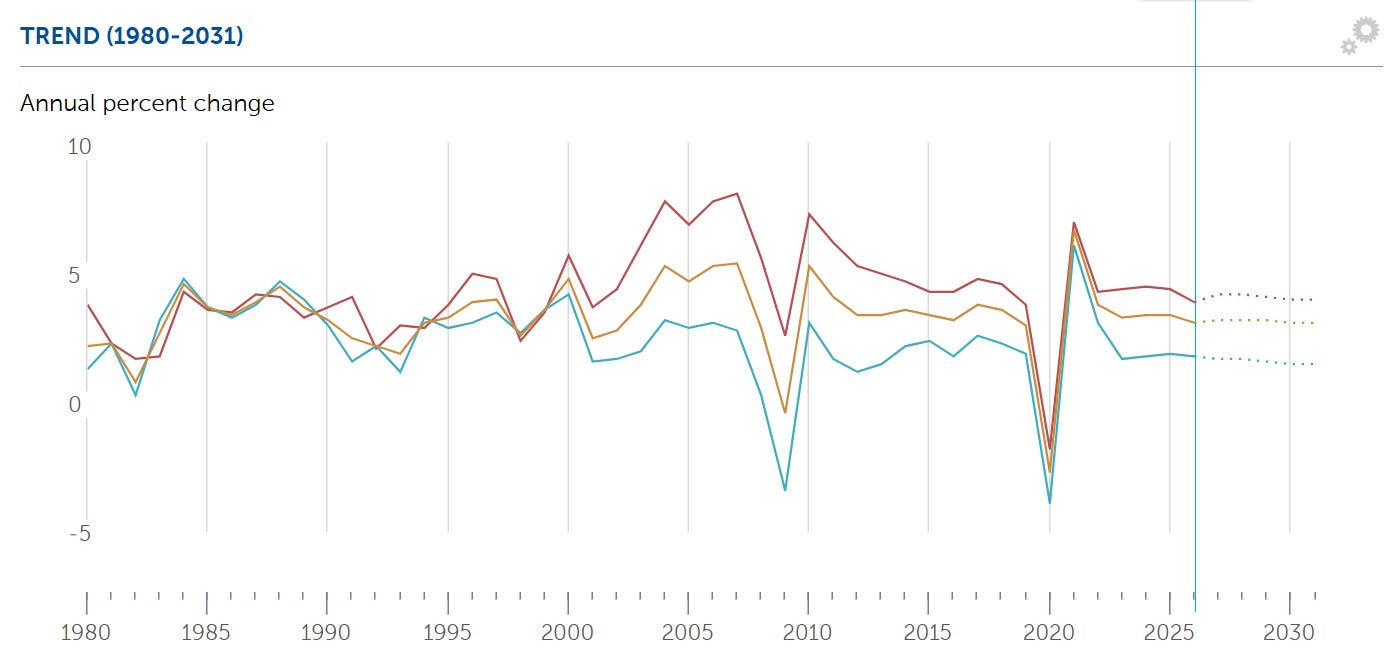
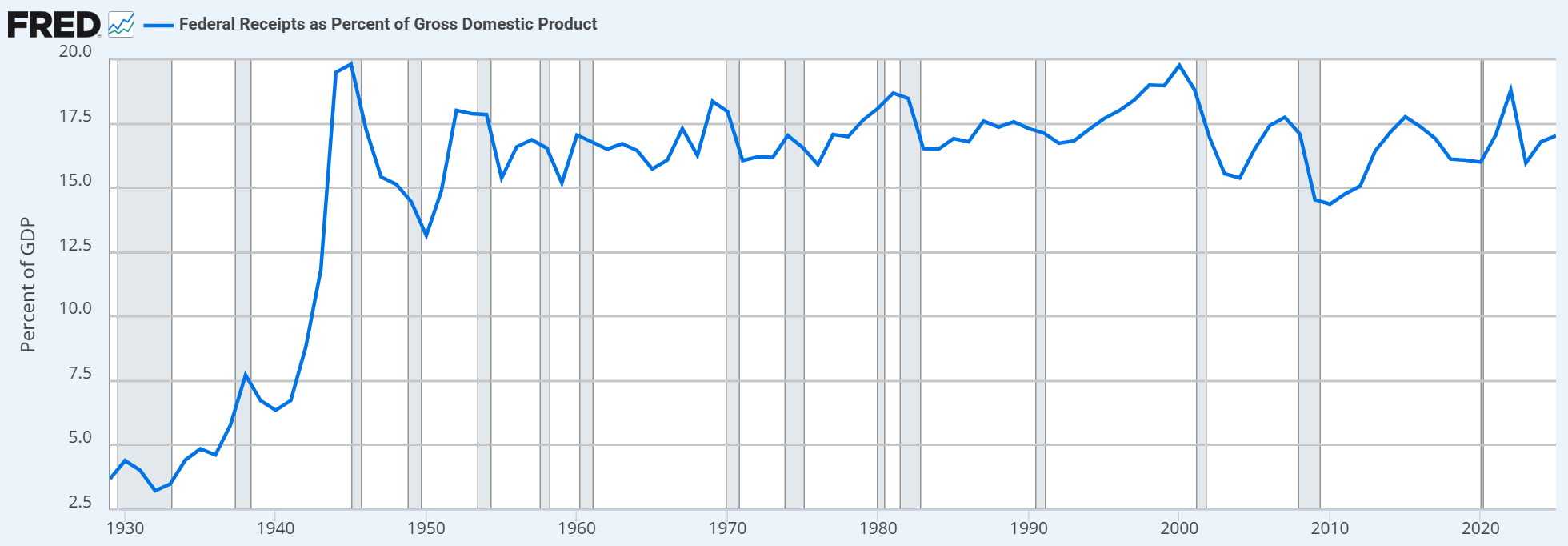
In this context, global growth is seeing a relative flatlining after COVID-induced whiplash, and is unlikely to exceed the economic success of the mid-2000s, while US federal receipts are about as consistent as they have been since the Post-War period.
Global GDP growth: https://www.imf.org/external/datamapper/NGDP_RPCH@WEO/OEMDC/ADVEC/WEOWORLD
In order to lubricate the Global Economy and increase the United States’ already advantaged global position, the Fed must cut rates. It is simply essential in order to realize both domestic and global economic growth, as well as the tax receipts necessary for the US government to actually soften its total debt. The world has mostly accepted the new Trump Trade regime or is at least waiting it out, and the return on US assets continues to outperform the rest of the world, while China is altogether mum on the series of global conflicts that the United States seems bent on pushing to their limit. Rate decreases are unlikely to fail in an environment where dollars, otherwise constrained in their availability, become more desirable because they can be used to fuel the ever-increasing portfolio growth to which the rest of the globe is now increasingly becoming accustomed, and within which China is still providing no suitable substitute.