


Charles Schwab and Fidelity love to run up stocks on CNBC and leave retail investors holding the bag - this is always the reason that, while Jim Cramer’s advice can be useful in the abstract, the “Inverse Cramer” portfolio was rocketing up until he (or presumably his producers) realized the market was getting wise to the act.
It’s not hard to know that the AI buildout was overbought - concerns about AI overbuilding were out as early as 2024. “Round-tripping” and “polishing turds” became increasingly more meaningful as the cycle continued, while AI-driven announcements - a weekly or ever daily occurrence - would send major stocks bouncing ever higher.
As the trade now unwinds where broad legislative action may simply reduce enthusiasm at the margins for data center buildout, retail investors will be forced to pick up the pieces.
This is where cash always looks silly - in the stock run up - and is always so valuable as stocks burn themselves down. The issue with AI is that its relative valuation collapse will, for a time, take the broader market - and yes even GDP growth - with it.
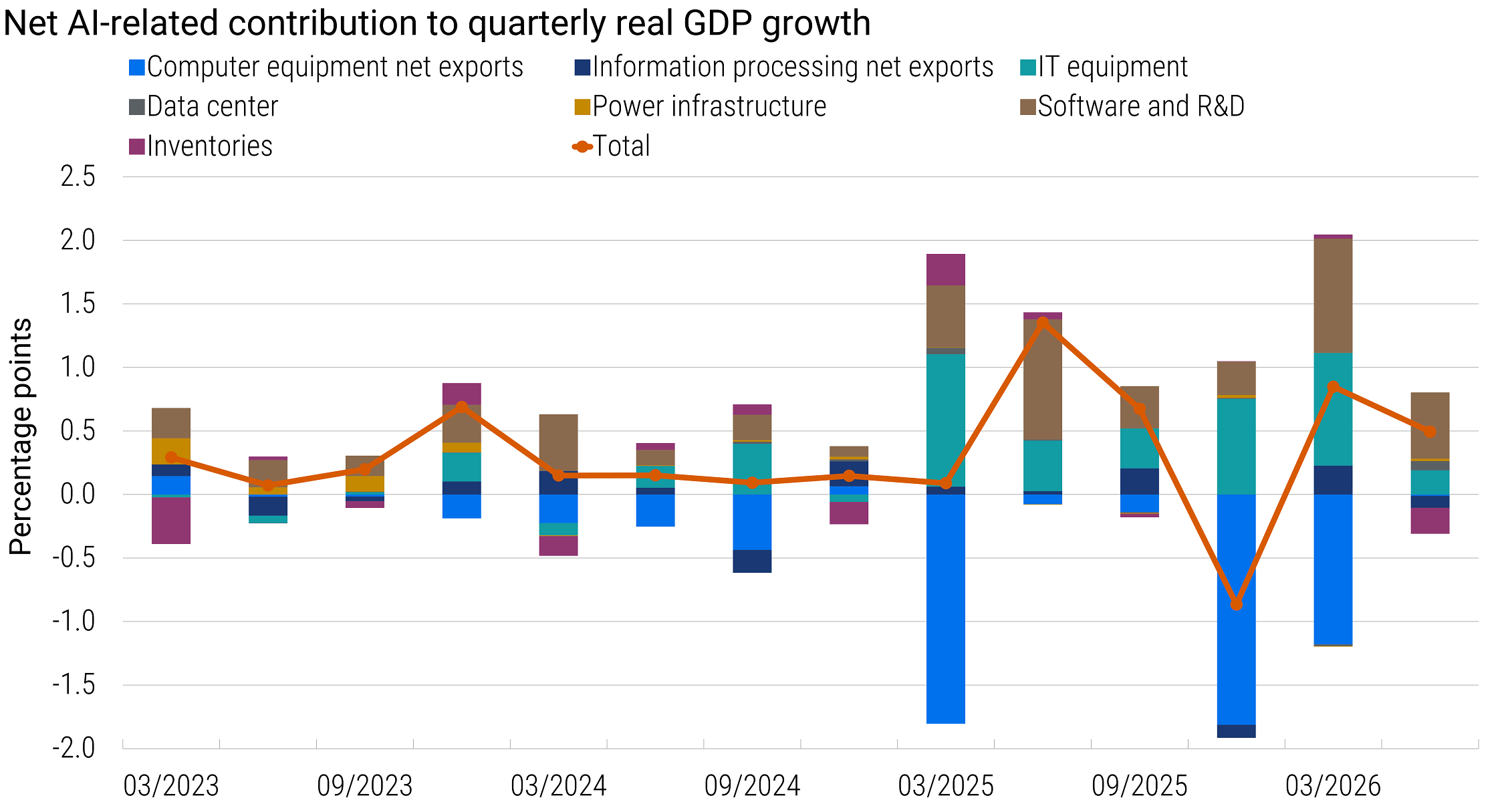
source: https://www.pimco.com/sg/en/insights/the-ai-investment-boom-goes-beyond-america
At the same time, sitting in cash means that your overall portfolio value inflates away, in burdensome years, as much as 5 or 7%. Why is this even possible? How does one justify maintaining any sort of liquidity when all it does is in fact looooose you money???
The reality is that intelligent investors prepare for major downturns and realize which stocks are guaranteed to recover early. Look at David Tepper - after calling the bottom on Bank of America, he’s worth $20b and owns a football team.
This doesn’t mean sitting in cash is always good, but profit-taking and maintaining cash somewhere between 10-20% - except after periods of significant run-up in picks whereafter cash could exceed 30% - can make it easier to take advantage of recoveries.
Stocks that go down 60 or 80%, but then recover to near nominal levels, offer investors between 2-5x returns on cash dispensed. In a portfolio at 10% cash, this is between 20 and 50% total return. At 20% cash, 40 to 100% total return, and at 30%, 60 to 150% total return.
While many hustlers would say that 150% isn’t enough, they need 1500% or more, that would show that their other sources of revenue simply don’t justify them participating in the equity markets. The average REIT can return nearly 10% yearly without much attention. Property ownership, landholding or otherwise physical assets - without jumping into the stock market, can deliver relatively comparable returns to many portfolios without nearly as much risk. In fact, the biggest reason to be in markets, compared to other fixed assets, is the liquidity, so why not maintain it?
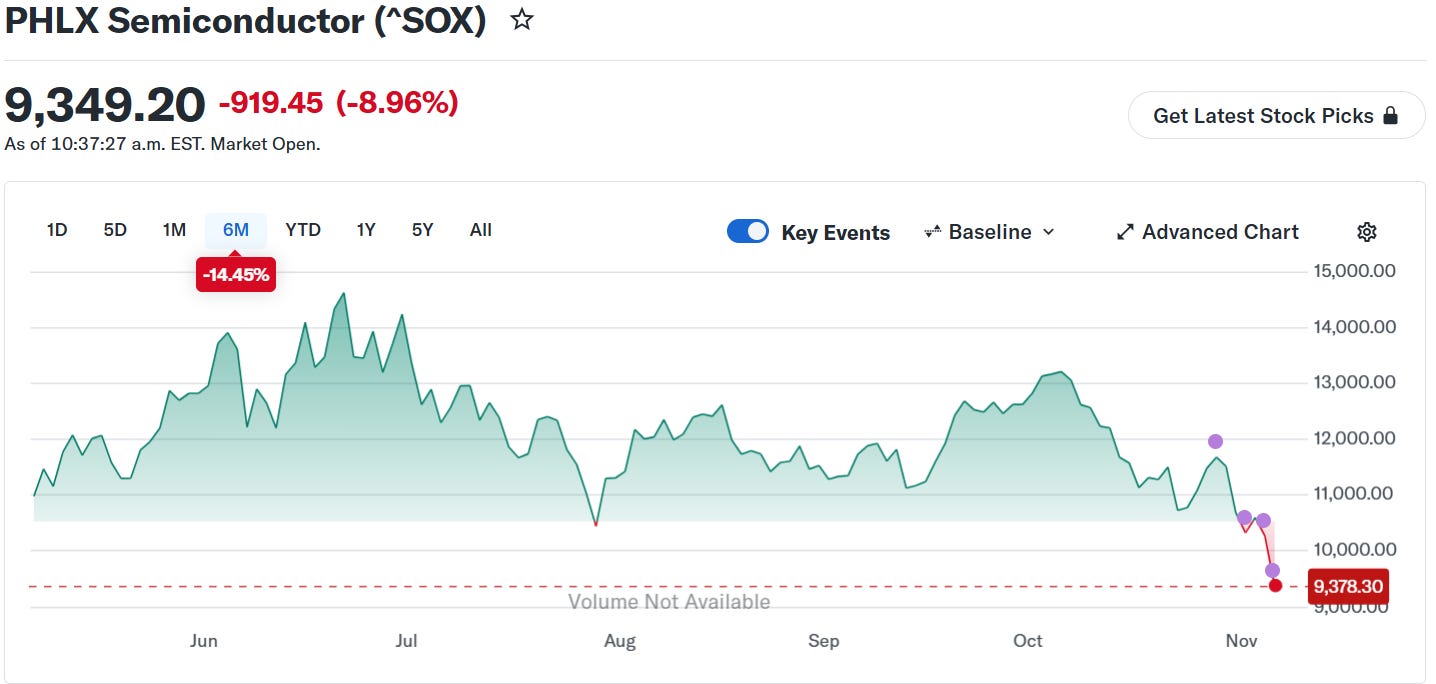
The semiconductor industry is now losing optimism at the margin, effectively going on sale, and taking the rest of the market with it. As of this writing, the NASDAQ is down 4% today after trading up on post-election consolidation yesterday. Will Democrats really finish off the AI trade, or will they come out with contrition so as not to perturb the markets? A little more time will tell, as the bloodletting continues, but such will be the time to buy back in - with all that cash you may or may not have on hand.