

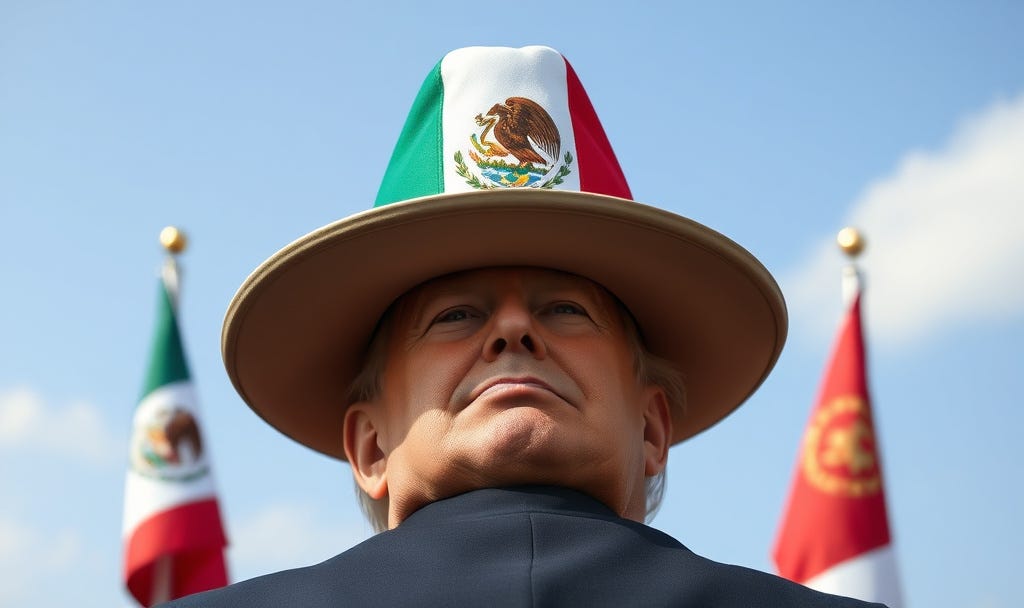
According to Twitter circles, TACO (Trump Always Chickens Out) has now transitioned to NACHO: Not A Chance Hormuz Opens.
This is a welcome development to those understanding that the United States is placed at a relative advantage in the new global energy system, in which the US can offload its current overwhelming natural gas supplies while returning to its pre-WWII status as a creditor nation, while others come at beck and call to satisfy the political agenda of a “Greater North America”.
As in inflation, the cure for high prices is often high prices. It has been understood since the advent of the Triffin Dilemma that the US cannot maintain its position as reserve currency distributor without undermining its industrial base and domestic standard of living. While it would have been more difficult to throw off reserve currency status by simply “calling dollars back”, Trump has returned sobriety to the US money supply by making the dollars (and T-bills) increasingly undesirable.
For the time being the only solution is to chase US dollars to buy oil, but eventually as other oil supplies spin up in response to high prices, US currency will become again not only less desirable, but also less suitable to global trade, since the US will by that time occupy a retrenched position. That retrenched position is beneficial to the domestic populace and somewhat of a safer position for the local elites - though certainly less globalized and glamorous - but it also means that the US will intervene in future global conflicts only on the margins, perhaps apropos to what occurred in World Wars I & II. While China, Russia, and a weakened but resilient Iran run riot in their regions, they may eventually come in conflict - “Man in the High Castle” style - and ex. a US intervention will go begging for money and weapons while they destroy each other.
Europe is a wildcard, because - will it develop a spine, or simply be conquered by Russia? It can be a great customer to the United States, but it’s getting squeezed.
There is of course one “release valve” to all of this - China democratizing. On some levels, China functions according to the consent of the governed. The CCP is incredibly wary of civil unrest, but inflation and the domestic economic outlook continue to tax the populace. With their own battles to fight, Russia and Iran are not necessarily best suited to serve as creditors for Chinese growth, while unlocking better relations with Europe and Japan could be roundabout ways to avoid dealing with a stern “Daddy Trump”, those countries also fear the influence of China continuing to grow, because as China grows, so does the control of the CCP, which will place its institutional interest above all others, including the common markets.
At the same time, democratic institutions, a social welfare state, a stable demographic picture are all aspects of Chinese development which would hold back the institutional dependency that has developed between the populace and this specific political party. If there are cleavages within the party, that can be exploited into cadres, and possibly lead to the formation of a multi-party state, similar to the delightful “managed democracies” which exist in the West. This, however, would be a delicate equilibrium, and further tax the ability of the international system to subsidize rampant Chinese exports and over-financialization.
It seems when one buys stability in one region, it only leads instability to pop up someplace else.